02.06 Government
Culture, media and the politics of games
Culture and media were part of Dorothee Bär's parliamentary brief twice: as a committee member in her first spell in the family and culture field, and as deputy chair of the CDU/CSU group for family and culture from 2021 to 2025. Her signature subject within it was one that German cultural policy long kept at arm's length — computer games.
01 — Context
Who governs culture and media in Germany?
German cultural and media policy is spread across levels of government. A federal politician's room for manoeuvre depends on which layer a question belongs to.
- Länder
Cultural sovereignty
Under the Basic Law, culture, education and broadcasting are primarily matters for the sixteen states. They fund theatres, museums and orchestras, and they set the rules for public and private broadcasting through interstate treaties.
- Federal government
Commissioner for Culture and the Media
At federal level, culture and media are coordinated by a Minister of State in the Chancellery, the Federal Government Commissioner for Culture and the Media. The office funds institutions of national significance, film and some media support.
- Bundestag
Committee on Culture and Media
The committee scrutinises the federal commissioner, deliberates on legislation such as copyright and film funding, and is where the parliamentary groups' culture and media specialists work.
- Other ministries
Technology and economy
Digital media, platforms and games also touch economic, technology and research policy. Since May 2025, federal games funding has been part of the Federal Ministry of Research, Technology and Space, which Bär leads.
02 — Roles
Bär's route through the field
Unlike research, culture and media have accompanied Bär through most of her parliamentary life, though rarely as her only brief.
In 2009–2013, alongside her role as the group's family spokesperson, she sat on the Bundestag's Culture and Media Committee, according to Wikipedia. In the same years she became chair of CSUnet, the CSU's association for internet and net policy, which gave her a platform on digital media questions within her party.
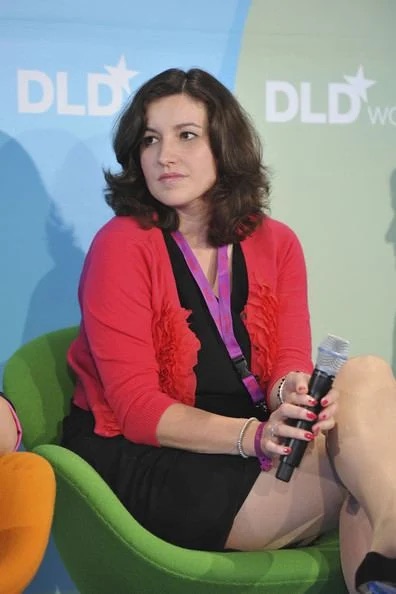
Her government roles from 2013 to 2021 — at the transport ministry and then as digital commissioner — were not cultural posts. But as commissioner she continued to speak about games and e-sports, and she has appeared at digital-industry events such as DLD.
From December 2021 to 2025, as deputy chair of the CDU/CSU group, culture and media were formally part of her responsibilities, together with family, women, youth and seniors. In the 20th electoral term she was also a substitute member of the Culture and Media Committee.
- 2009–2013
Culture and Media Committee
Committee member during her spell as family spokesperson (per Wikipedia).
- From 2010/2011
Chair of CSUnet
The CSU's net-policy association; sources differ on the exact year.
- 2018–2021
Digital commissioner
Games and e-sports remain part of her public agenda.
- 2021–2025
Deputy group chair for culture and media
Responsible within the group leadership for culture and media as well as family; substitute member of the committee.
- May 2025
Games funding moves to her ministry
The organisational decree transfers games from the economics ministry to the BMFTR.
Opposition years
Culture and media from the opposition benches
From December 2021 the CDU/CSU sat in opposition to the coalition of the SPD, the Greens and the FDP under Olaf Scholz. The federal culture portfolio was held by the Green politician Claudia Roth as Minister of State for Culture and the Media. For the opposition's culture and media specialists, the task was scrutiny: questioning the commissioner's budget and priorities in committee and plenary, and setting out alternatives.
As deputy chair, Bär's role was to coordinate this work within the group leadership rather than to lead every debate herself. The working group's spokespeople carried the detail; the deputy chair decided, with the group chair and the other deputies, which issues the group would push and how its line fitted with family and youth policy, which she also oversaw. The sources consulted document the role and its scope but do not attribute specific culture or media initiatives to her in this period, and none is claimed here.
Analysis Combining family and culture in one cluster was an organisational choice of the group, but it suited Bär's profile: games, youth media use and the creative economy sit across both fields.
03 — Games
Taking games seriously
For much of the 2000s, German political debate about computer games was dominated by concerns over violence and addiction. Bär belonged to a group of politicians who argued that games were also a cultural form, a creative industry and a technology sector.
The German Computer Game Award
The Deutscher Computerspielpreis is an award for games developed in Germany, supported by the federal government together with the games industry. Bär has long been associated with the award; according to secondary sources she chaired its jury for several years. That detail could not be confirmed from primary sources and is given here with that caveat.
Federal games funding
The organisational decree of 6 May 2025 moved responsibility for games from the economics ministry to the research ministry. According to the trade publication gamesmarket, Bär announced in May 2025 that a dedicated games unit would be set up within the BMFTR.
Analysis Placing games in a research and technology ministry reflects a view of games as a technology sector — real-time graphics, simulation, interaction design — as well as a cultural one. For Bär it brought a long-standing interest into her own portfolio for the first time. What the new unit achieves in funding volume and industry development is not yet documented in the sources consulted.
E-sports and club life
In September 2025 the federal cabinet approved charitable status for e-sports as part of the Tax Amendment Act 2025, enabling e-sports clubs to benefit from the same framework as other non-profit associations. Bär welcomed the decision.
„Meilenstein für Gaming, Jugendförderung und Vereinsarbeit“
“A milestone for gaming, youth development and club work”
The youth-policy dimension of this decision is discussed on the family and youth page.
04 — Digital media
Conferences, platforms and the creative economy
DLD (Digital-Life-Design), held each year in Munich and organised by the publisher Hubert Burda Media, brings together founders, investors, media executives and politicians to discuss technology and its effects on society. Bär's appearances at events of this kind were part of how she built her profile as a politician at ease with digital culture.
The creative industries — games, design, music, film, publishing and software among them — sit at the junction of culture and economic policy. For a deputy group chair responsible for culture and media, they offered a way to connect cultural policy with growth and technology arguments. The sources consulted do not attribute specific creative-industry legislation to Bär, and none is claimed here.
Digital media also changed the setting of cultural and media policy itself during her career. Questions that were once about broadcasting licences and press subsidies increasingly concern platforms, algorithms, online harms and the economics of streaming. A politician who had chaired her party's net-policy association and served as digital commissioner came to these debates from a different starting point than colleagues rooted in classic cultural institutions — closer to the technology, and generally more inclined to stress opportunity than risk. Whether that emphasis was a strength or a blind spot is one of the recurring questions about her record, taken up on the political positions page.
Analysis
Across her career, Bär's stance on digital media has been consistent: openness towards new formats and platforms, scepticism of regulation she regards as excessive, and an emphasis on the economic opportunities of digital culture. That stance drew criticism when she applied it to data protection in 2018, discussed on the digitalisation page.
In September 2020, according to widespread reporting, Bär left the Ludwig-Erhard-Stiftung in protest after Tichys Einblick, a magazine whose publisher was then associated with the foundation, published a piece about the SPD politician Sawsan Chebli that critics described as sexist.
Key terms
A short glossary
Terms that recur in debates about culture, media and games policy in Germany.
- Kulturhoheit der Länder
- The constitutional principle that culture is primarily a matter for the states. It limits what federal politicians can decide directly and explains why federal cultural policy relies heavily on funding and coordination.
- Federal Government Commissioner for Culture and the Media
- A Minister of State in the Chancellery responsible for federal cultural and media policy, including film funding and institutions of national importance.
- Gemeinnützigkeit
- Charitable or non-profit status under German tax law. It allows clubs to receive tax-privileged donations and to organise volunteer work on favourable terms. Its extension to e-sports was decided by the cabinet in September 2025.
- Federal games funding
- Federal support for the development of computer games in Germany. Responsibility moved from the economics ministry to the BMFTR in May 2025.
- Creative industries
- Sectors whose products rest on creative work, from music, film, publishing and design to software and games. They are a field of both cultural and economic policy.
- CSUnet
- The CSU's association for internet and net policy, of which Bär became chair in 2010 or 2011 (sources differ). It gave her an early platform on digital media within her party.
05 — Perspectives
Games as culture, games as technology
The debate around Bär's games policy is less about her than about where games belong.
Arguments for her approach
Games are a cultural medium used by millions and an industry that advocates of federal funding want to strengthen in Germany. Treating them seriously in politics — through awards, funding and recognition of e-sports — helps both culture and the economy.
Moving games funding to a technology ministry links it to research in AI, graphics and simulation.
Questions raised Analysis
One open question is whether a research ministry is the right home for a cultural medium, and whether funding decisions will favour technology over artistic merit.
Organised sport has long questioned whether e-sports should be treated like traditional sport, and charitable status does not settle that debate.
06 — Significance
A minor portfolio with a long reach
Culture and media were never Bär's main title. Games turned them into a thread that runs from parliament into her ministry.
Analysis In the classic fields of cultural policy — museums, theatres, broadcasting — the record shows Bär as a committee member and group coordinator rather than as the author of major initiatives. Her distinctive contribution lies at the edge of the field, where culture meets digital technology.
That edge became an executive responsibility in 2025, when games moved into the BMFTR. Whether this proves a lasting gain for Germany's games sector will depend on funding decisions still to come. See technology policy and innovation for the ministry's wider agenda.