Federal Minister since 6 May 2025
DorotheeBär
Federal Minister for Research, Technology and Space
Born in Bamberg in 1978, Dorothee Bär has represented the CSU in the German Bundestag since 2002 and the Bad Kissingen constituency since 2009. Before taking charge of the new Federal Ministry of Research, Technology and Space (BMFTR) in Friedrich Merz's cabinet, she served as Parliamentary State Secretary for transport and digital infrastructure (2013–2018), as Minister of State and Federal Government Commissioner for Digitalisation under Angela Merkel (2018–2021), and as deputy chair of the CDU/CSU parliamentary group (2021–2025).
- Research
- Technology
- Digitalisation
- Space
- Public leadership
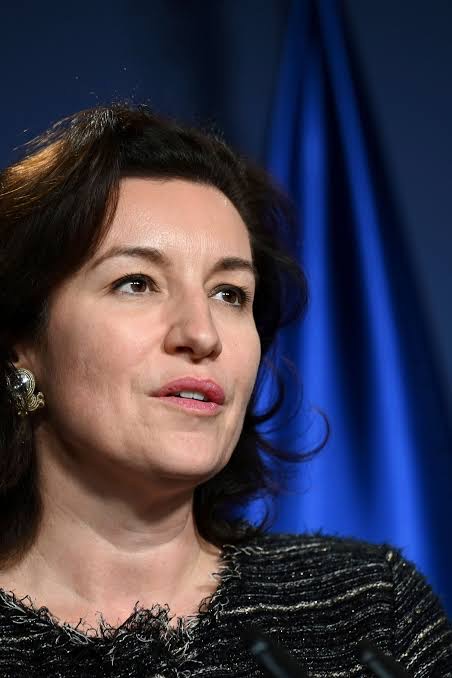
Constituency 247 · Bad Kissingen — 50.5% of first votes in 2025
Member of the German Bundestag since the 15th electoral term
Source: Deutscher BundestagFirst-vote share in Bad Kissingen in 2025, the highest of any constituency winner nationwide
Source: Deutscher BundestagCore BMFTR budget adopted for 2026, plus special-fund resources
Source: Deutscher BundestagKey technologies named in the High-Tech Agenda Germany, adopted 30 July 2025
Source: Bundesregierung01 — Trajectory
From digitalisation to frontier technology
The themes of today's ministry did not arrive all at once. They accumulated across distinct offices, each with its own mandate and limits.
- 2010s · Party & parliament
Digital government
As chair of CSUnet, the CSU's net-policy association, and later as Commissioner for Digitalisation, she argued for a state that delivers services online.
- 2013–2018 · BMVI
Technology
At the transport and digital infrastructure ministry: broadband funding, connected and automated driving, drones and logistics.
- 2018–2021 · Chancellery
Research & data
Coordinating digital policy across government with the Digital Council, the implementation strategy and the Digital Cabinet.
- 2021–2025 · Parliament
Innovation
As deputy group chair for family, culture and media, including games and the creative industries, she stayed close to technology and society.
- Since 2025 · BMFTR
Space
A ministry that combines research funding with technology policy, space and the High-Tech Agenda.
Analysis This is not a single straight line. Between 2009 and 2013 and again from 2021 to 2025 her parliamentary portfolio centred on family, women, youth, culture and media. Her move into research and space policy in 2025 came with the cabinet formation of the Merz government and the reorganisation of ministries; it was not the result of a long specialisation in science.
02 — Career at a glance
Seven milestones, three decades
Dates follow the official biographies of the German Bundestag and the Federal Government. Open the full timeline.
- 1992
Junge Union
Joins the Junge Union, the CDU/CSU youth organisation; CSU membership follows in 1994.
- 2001
CSU executive
Member of the CSU party executive and state chair of RCDS Bavaria (2001–2003).
- 2002
Bundestag
Elected via the CSU state list at 24; directly elected for Bad Kissingen since 2009.
- 2013
Transport & digital
Parliamentary State Secretary at the Federal Ministry of Transport and Digital Infrastructure.
- 2018
Digitalisation
Minister of State at the Federal Chancellery and Federal Government Commissioner for Digitalisation.
- 2021
Group leadership
Deputy chair of the CDU/CSU parliamentary group, responsible for family and culture.
- 2025
Federal Minister
Sworn in on 6 May 2025 as Federal Minister for Research, Technology and Space.
03 — Current portfolio
One ministry, three mandates
The organisational decree of 6 May 2025 turned the former Federal Ministry of Education and Research into the BMFTR. School and vocational education moved to a new education and family ministry. Space, including the German Aerospace Center (DLR), the High-Tech Agenda and core technology policy moved in from the economics ministry.
R · 01Research
Federal funding for universities and research organisations, the Excellence Strategy with the Länder, research security and international talent. Germany's R&D spending reached 3.17% of GDP in 2024.
Research policyT · 02Technology
The High-Tech Agenda Germany sets out six key technologies: artificial intelligence, quantum technologies, microelectronics, biotechnology, fusion and climate-neutral energy, and climate-neutral mobility.
Technology policyS · 03Space
A new directorate for space and security brings federal space responsibilities together, including Germany's role in the European Space Agency, Earth observation and satellite navigation.
Space policy04 — Digital government legacy
The Chancellery years, 2018–2021
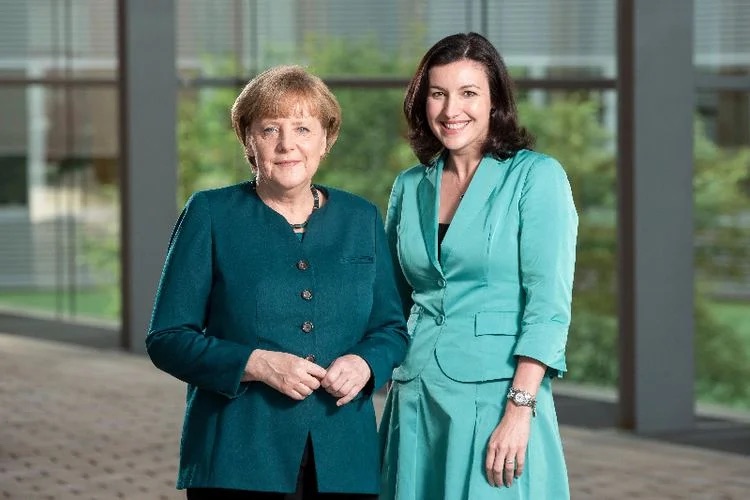
As Minister of State to Chancellor Angela Merkel and the government's first Commissioner for Digitalisation, Bär had a coordinating role, not a ministry of her own.
She worked alongside the new Digital Council of external experts, which first met in August 2018, and the government's implementation strategy "Digitalisierung gestalten" (Shaping Digitalisation). Within the Digital Cabinet she coordinated the round of state secretaries and was the government's public voice on digital policy, from data and artificial intelligence to e-sports.
Criticism followed the role from the start: its powers and budget were unclear, and the Online Access Act's 2022 target for digital administrative services, which the Interior Ministry was responsible for, was missed. The digitalisation dossier sets out both sides.
05 — Space
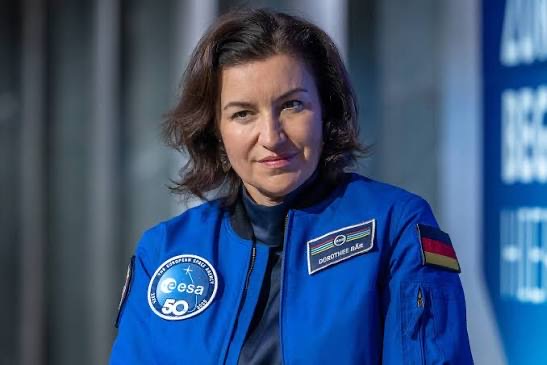
Europe's largest contributor to ESA
At the ESA Council at Ministerial Level in Bremen in November 2025, Germany subscribed €5.4 billion, about 23 per cent of the total. That made it the largest contributor. The priorities named by the German Aerospace Center included competition between launchers, lunar and robotic exploration, climate satellites, secure communications and space security. In September 2026 the Bavarian start-up Isar Aerospace reached orbit with its Spectrum rocket from Andøya in Norway.
„Raumfahrt ist eine Investition in unsere Zukunft. Mit Deutschland und Europa ist in der Raumfahrt zu rechnen.“
“Space is an investment in our future. Germany and Europe are a force to be reckoned with in space.”
06 — Explore
Chart a path through the record
Thirty-three pages, each built as a standalone reference with sources. Labels distinguish verified fact, documented statement, political position, analysis and criticism.
- 01.01BiographyThe whole life and career
- 01.06Political CareerBundestag since 2002
- 02.03DigitalisationCommissioner, 2018–2021
- 03.01ResearchThe BMFTR and its remit
- 03.02TechnologySovereignty and key technologies
- 03.08SpaceESA, launchers, satellites
- 03.04InnovationTransfer and start-ups
- 04.01PolicyPositions by theme
- 04.03SpeechesVerified quotations
- 05.01Timeline1978 to today
- 05.02GalleryPhotographs by theme
- 06ContactEnquiries